

Social media is one of the strongest factors of brand promotion in today’s world because it has become a core network for communication and information sharing. With 4.9 billion users globally among different social platforms, individuals are granted the opportunity to reach and engage with large and diverse audiences and communities from their fingertips. With the continual rise of social media, influencer marketing has become a powerful tool all digital marketers should consider to expand their influence and reach the right audience. Social media has an enormous impact on today’s world, as over 60% of the global population drives it, and if you are not utilizing it to your advantage, you are falling behind the times. Although traditional advertising can still be effective for getting well-crafted content in front of viewers, if you want to learn about why taking advantage of influencer marketing on social media can be so advantageous for your advertising efforts, and join in with the 93% of marketers who already have utilized it, you are in the right place!
What even is influencer marketing?
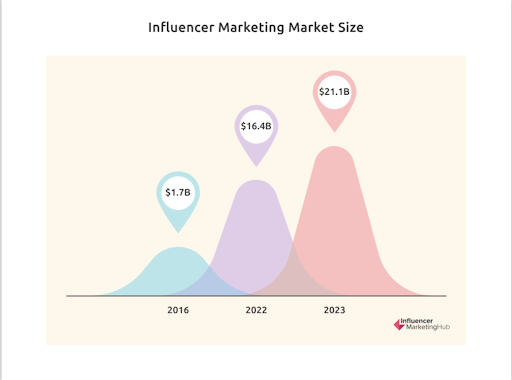
Influencer marketing is a strategic approach used by many different brands who collaborate with individuals, typically ones who have a significant following and influence over their specific followers on social media. These individuals, often referred to as influencers, use their social platforms and reputation to promote products and services for the brands they collaborate with. If you have your own business, you should definitely consider leveraging influencer marketing, and becoming a part of the $21.2 Billion, and growing industry to help your company prosper.
Why Does Influencer Marketing Work?
- It provides for niche expertise.
Social media creators build their following based on individuals who have similar interests and beliefs as them, which creates a niche, tight-knit community. For the most part, they acquire larger-than-average followings because they are considered experts in their particular niche. Brands can reach out to influencers in their same niche, who align with their brand, and who in turn can share their product or service to a network of followers who already value their opinions and recommendations in the field, and allow their product or service to reach a web of people who will likely be interested in it. This provides your brand with a very targeted reach, which enables them to connect and engage with a highly particular and invested audience. For example, if a health food brand wanted to optimize their sales, partnering with a nutrition influencer would allow their healthy foods to be seen by a network of people who are interested in healthy foods, and who likely follow the nutrition influencer because they want to hear and trust their particular health recommendations. In fact, influencer marketing research by the HubSpot Blog has shown that working with smaller, less expensive creators (under 100k followers) can be beneficial because it will provide your brand with access to a community who is likely bound together with stronger relationships and shared interests. On top of this, leveraging an influencer’s expertise can greatly alter how a brand, especially a smaller and less well-known one, is perceived by strengthening its credibility in the market. - Many social media users prefer discovering new products through influencer marketing.
At the end of the day, customer preferences is the most important thing when it comes to marketing, and aligning with customer preferences is the cornerstone of successful marketing. If you agree with this, then influencer marketing should be a top priority for your business. The same influencer marketing research by the HubSpot Blog as referenced previously has also found that, “31% of social media users prefer to discover new products on social media through an influencer they follow over any other social format or channel.” The figures are notably elevated for Gen Z, with 43% favoring influencer marketing as their preferred product discovery channel. Understanding and catering to customer preferences should be a top priority for any brand, and influencer marketing clearly aligns with customer preferences. - Influencer marketing leads to higher engagement rates.
Research by the University of Washington has shown that increased spending on influencer marketing does lead to higher engagement rates. The study found that, “if a firm[s] spent 1% more on influencer marketing, they would see a nearly 0.5% increase in engagement. They also concluded that reallocating spending based on the study’s insights could result in a 16.6% increase in engagement.” Engagement is a particularly important part of social media marketing, because in today’s world having followers is not enough: brands need engaged followers in order to turn those followers into sales. This study makes it clear that increasing spending on influencer marketing can absolutely lead to a higher ROI for many brands. Additionally, these higher levels of engagement provide beneficial feedback and insights to the brand. - Influencer marketing is trusted.
With the rise of influencer marketing has come a great amount of research surrounding its effectiveness, which has concluded that it is a trusted form of marketing by both customers and marketers. In fact, research conducted by HubSpot on important influencer marketing statistics of 2023 has found that, “50% of Millennials trust product recommendations from influencers… 92% of marketers believe that influencer marketing is an effective form of marketing,” and “33% of Gen Z-ers have bought a product based on an influencer’s recommendation in the past three months.” These statistics were reinforced by research from the University of Linkoping, who found that in terms of ROI, “45% [of marketers] said that [influencer marketing] is very effective and 45% [believe it is] effective.” Adversely, the same research found that merely 5% of marketers found influencer marketing to be ineffective, and 0% stated that it was very ineffective. Another study conducted by Social Shepherd has found that 61% of customers trust influencer recommendations, whereas only 38% of customers trust branded social media content. It is important to note that these statistics drop with product recommendations from celebrities, and that influencers with under 100,000 followers actually gain up to 60% more engagement than larger macro influencers. Nonetheless, this means that when viewers see your product or service being promoted on social media by an influencer, there is a good chance that they will trust that recommendation, which certainly means that they will have a higher likelihood of becoming a customer of your brand. - In the modern world, digital connectivity is becoming increasingly important.
Another study conducted by Linkoping University’s Department of Management and Engineering concluded that social media is going to become all the more important for every new generation of the future. Currently, Generation Z, “born within the beginning of the internet,” has the highest percentages of social media usage. In fact, according to Morning Consult Pro, “Gen Zers reported using social media for four or more hours a day (54%) at a rate almost double that of all U.S. adults (28%).” Moving onward, the trajectory of social media’s influence continues with generation Alpha, born after 2010, and who, “witnessed an era of rapid advanced technologies,” even greater than that of their prior generation. As technology continues to advance, the presence of social media is going to become increasingly prominent, creating even larger platforms for social connectivity and influencer influence, as followers are “increasingly attracted to the influencers and the influencer communities.” As social media usage continues to heighten among newer generations, influencer marketing is becoming a progressively more crucial part of any brand’s success. Of course, different brands have different target markets, which is important to consider in any marketing strategy, so today influencer marketing may not be the most effective for companies targeting older generations, but who knows, in 30 years influencer marketing may become a valuable form of marketing for every generation, so companies should get ahead of the trend and consider influencer marketing if they care about the longevity of their brand.
BONUS FACT: Influencer marketing is so prominent in our world today that even prestigious universities such as Harvard have courses dedicated to it!
Influencer Marketing’s Role in Business-to-Business and Business-to-Consumer:
Influencer marketing plays an important role for both Business-to-Consumer (B2C), which refers to transactions that take place between a business and an individual as the end customer, and Business-to-Business (B2B), which refers to a type of transaction that takes place between one business and another. Although the effect of influencer marketing may be more obvious for B2C, the influence employed by influencers in both situations is considerable, impacting brand perception, reach, and market influence across these distinct yet interconnected realms. A deep-dive study into B2B influencer marketing by Zen Media concluded that influencer marketing is crucial with B2B initiatives because, “it is standard practice for B2B buyers to make inquiries among peers before ever making direct contact with a potential brand.” Their research found that the majority of the B2B customer’s buying process occurs autonomously, particularly through “the buyers researching products online, reading reviews, and discussing products with peers (or influencers they follow) on social media.” B2B buyers highly value and prioritize peer inquiries as though they are research endeavors. Earning strong endorsements from industry influencers can significantly increase the likelihood of B2B sales, and is viewed as a critical data point in the B2B buyers’ research, adding to their pool of peer insights.
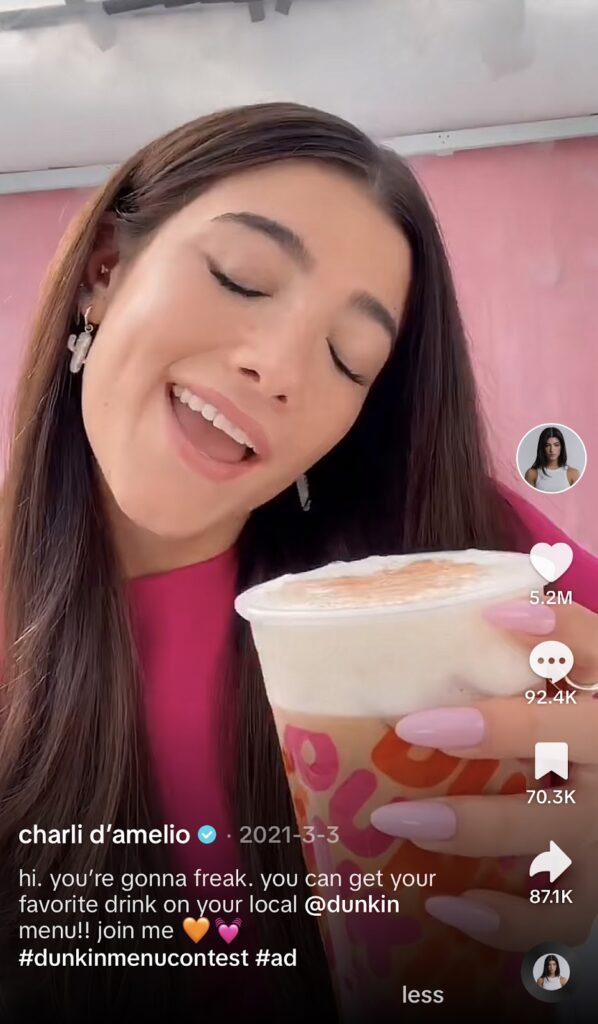
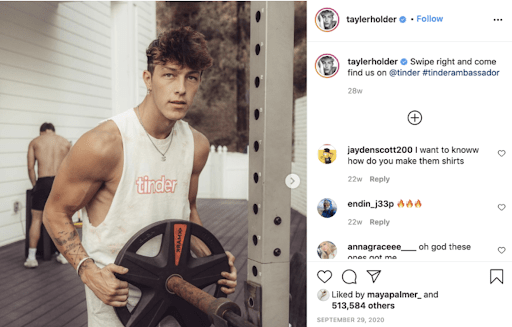
There are many success stories of influencer marketing in both B2C and B2B marketing. Dunkin’ Donuts, for example, is a major multinational coffee and donuts B2C brand who has gained a significant following and increase in sales because of its strategic influencer marketing on TikTok. In 2020, Dunkin’ began a long-term sponsorship with Charli D’Amelio, the #1 most followed TikTok creator at the time. Charli promoted Dunkin’ Donuts by posting videos of herself drinking and ordering Dunkin’ products, which sparked the creation of a viral campaign created under the hashtag #CharliXDunkinContest. In addition to this, Dunkin’ Donuts released two drinks after Charli. According to NoGood, the first beverage released, called “The Charli,” led to a “57% increase in app downloads on launch day and 45% increase in cold brew sales the next day.” These high statistics show just how prominent that influencer marketing can be in the B2C realm. Another dominant example of B2C marketing finding high rates of success through influencers on social media is with the online dating and geosocial networking application, Tinder. Beginning in 2021, Tinder turned to Gen-Z influencers, with more than half of their users being aged 18-25, to promote their brand across social platforms including Instagram and TikTok. Tinder’s collaboration with macro influencers, and TikTok content creators “that matched Tinder’s brand identity, seamlessly integrate[s] paid posts into lifestyle content, and have strong organic engagement with followers.” As previously mentioned, influencer marketing leads to higher engagement rates, and Tinder’s influencer campaign is a prime example of this.
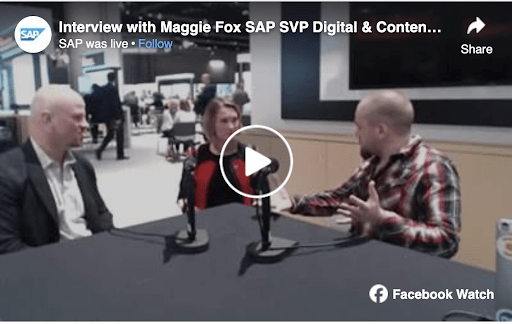
Just like there are plenty of examples of influencer marketing being successful in a B2C landscape, there are also many examples of influencer marketing triumphing in the B2B domain. One excellent example of how B2B companies can utilize influencer marketing to their advantage is SAP, a leader in application software with thousands of customers. There are several examples of SAP successfully utilizing influencer marketing to increase social engagement and brand awareness. At an event in Germany, “they invited five influencers to talk about topics including machine learning, data analytics, and loT. The event was trending in Germany for two days. The influencers in attendance drove 50% of all the social media mentions about this event, showing B2B can work with influencers just as well as B2C” (Isoline). SAP also collaborated with 11 influencers at one of their events in Florida, who all live streamed the discussions held for those who were unable to attend. This approach also featured an active Q&A, and “reached between 80,000 to 100,000 people online.” This use of influencer marketing for B2B companies is a powerful tool for increasing brand awareness, engagement, product visibility, credibility, and resonating with their target audience, which all assist in establishing a robust market presence. As B2B influencer marketing continues to grow, more and more businesses will be able to forge meaningful connections and enhance the profile of their company in a digital landscape.
Conclusion:
Influencer marketing is clearly a powerful and trusted tool for digital marketing in the contemporary world, and its significance is only going to strengthen as advancements in technology continue and newer generations emerge. Capitalizing on the reach, expertise, increased engagement rates and sales that can come from influencer marketing can significantly bolster any brand’s success in this digital age. So, stay up to date and consider utilizing influencer marketing on social media in your business’s marketing strategy!
Now that we have given you some new ideas and insights into influencer marketing, we hope that we haven’t bored you and have piqued your curiosity! To find out more… our team will be delighted to answer any questions.
Contact us today to learn more about how we can help improve your marketing strategy through the use of influencer marketing.

Leave a Reply