
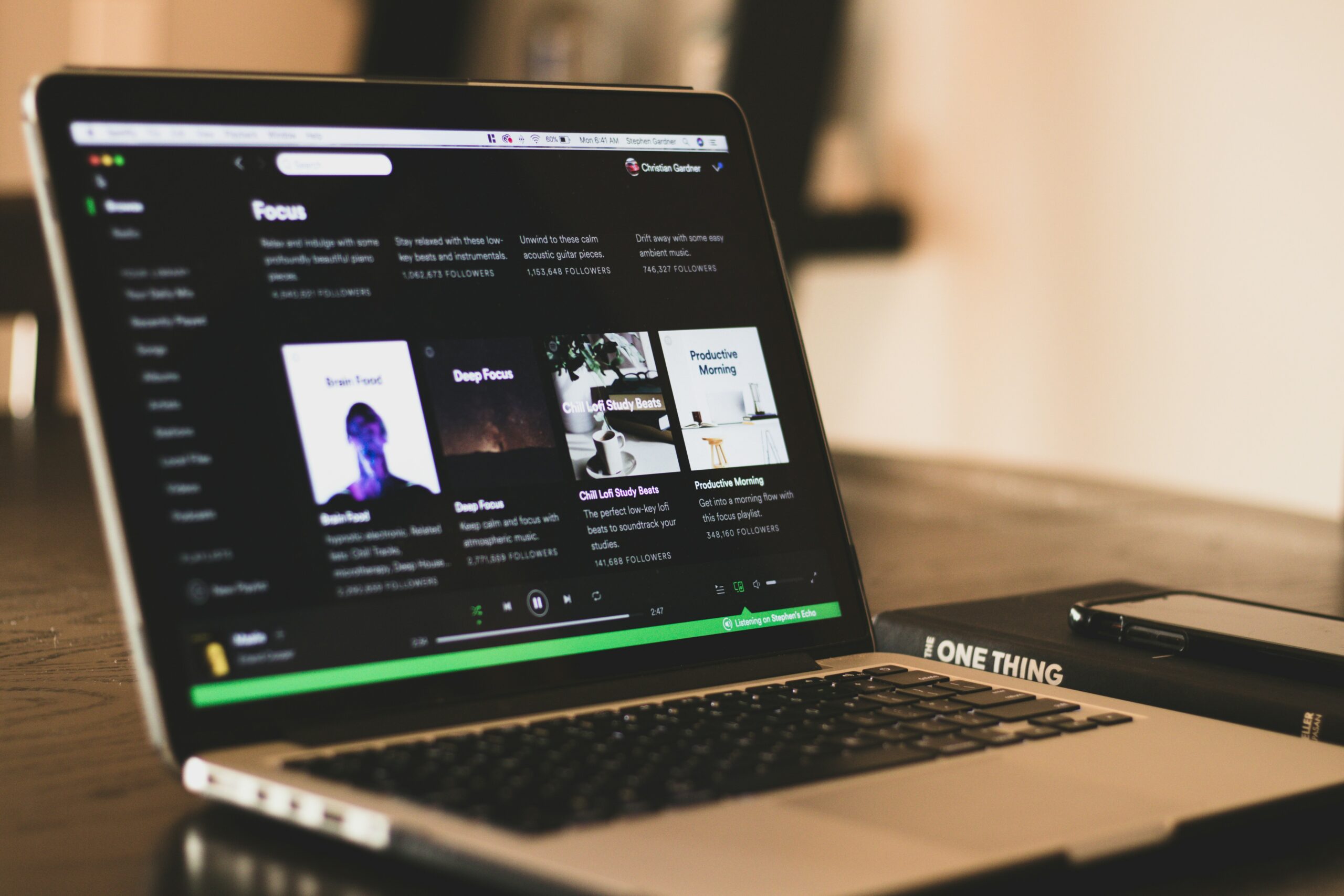
It’s the app that has revolutionized music listening since its launch in (now far) 2008, and the one everyone now refers to when talking about music. Over time, Spotify quickly climbed the ranks of the most-used apps, taking the title of the world’s most popular music streaming platform, with more than 626 million active users in the second quarter of 2024 (+14% compared to 2023).
Although everyone knows it, it is also true that not everyone thinks of this platform as an advertising medium to add to their marketing mix. The truth is that Spotify is an extremely valuable tool for brands, not only because of the huge user base that can be reached, but especially because of the way the advertising message is delivered: with audio ads.
For the first edition of Sonic Science, Spotify collaborated with Neuro-Insight, a leading company in the field of cognitive research, on the largest neurological analysis carried out on music and podcasts. More than 600 participants and more than 10 years of neurological research made it possible to observe how different genres of music impact our neurological state but, above all, which type of advertisement is best suited to that genre, so that it melts into the mood generated by that type of music and does not interrupt the listening experience. During the study, for example, the researchers found that the most effective advertisements for the rock genre were the longest ones, while for rap music the most effective were the coincise and direct ones that emphasized the last words of each verse, just like the musicality of the genre.
This unique study also found that the high level of engagement in listeners generated by the audio content remained constant even while they were listening to the audio ads. Translated: Spotify listeners tend to better absorb and remember ads, quickly climbing the awareness and consideration part of the funnel. Participants in the Sonic Science study, in fact, were able to remember brands very clearly and 1 in 5 participants said they searched for the brand online after hearing its ad on Spotify.
SPOTIFY BY NUMBERS
As we mentioned, the super fresh data provided by the audio streaming giant as of Q2 2024 show us that monthly active users have grown by 14% since last year, to a total of 626 million. Of these, ‘only’ less than half are subscribers to the premium service, which allows music to be listened to freely and without advertising interruptions, for a total of 246 million users (still a 12 per cent increase over 2023). All other users, 393 million, are therefore users who use the platform in its free version and are therefore reachable by advertisers in more than 180 countries. Quite a haul, eh?
Analyzing the origin of the users, it is also evident that Europeans are the most present users on the platform: in fact, European monthly active users represent 28% of the total – thus more than 175 million users – while those using the free plan are 38% of the worldwide total, almost 150 million users.
SPOTIFY AD STUDIO
After this overview, then, it will come as no surprise to learn that Spotify itself has created a solution that allows all advertisers to take advantage of this data to reach their target audiences: so, in 2020, Spotify Ad Studio was born, a self-service ad management platform that allows advertisers to create ad campaigns on Spotify on their own.
Or at least, it was called Spotify Ad Studio until its rebranding on 24 July 2024, when it took on a new look and feel and became Spotify Ads Manager.
Campaigns
The user-friendliness of Spotify Ads Manager allows it to be used by anyone, from the less experienced to the more advanced marketer. In terms of campaign structure, it is very similar to other advertising platforms: it is therefore possible to create a single ad or choose to create a more structured campaign, populated by several ad groups.
Target
The targeting that Spotify Ads Manager offers is very special, because in addition to classic first-party demographic data such as age, gender, location and language, it is also possible to identify one’s audience on the basis of listening behavior and interests and to decide when to offer one’s ad: when the user uses a specific device or platform, or when he or she listens to a specific music genre.
Budget
As with other advertising platforms, Spotify’s ads work based on auctions. It is therefore possible to set a spending limit and freely decide how the campaign will spend the selected budget: the platform, in fact, offers the possibility of deciding how often and for how long the ads will run and, above all, how much to spend as the ads are published. The standard setting will therefore distribute the budget evenly over the selected period; the accelerated setting will tend to offer a faster take-up of the ad, stopping once the budget has been used up; the frequency limit setting will allow a limit to be set on the maximum number of views to avoid excessive exposure of the brand to the public.
Objective
The objective selected for the campaign is the one that will guide the platform in the distribution of your ad. There are several objectives you can choose from:
- Awareness: if you have a coverage objective, Spotify will try to get your message to as many listeners as possible.
- Consideration: if you are more interested in the number of impressions, Spotify will try to distribute your ad as many times as possible.
- Optimize clicks: if you are more interested in clicks, thanks to machine learning Spotify will distribute your message to an audience more likely to click on your ad.
- Optimize video views: if you have a video ad, and you care about users viewing it, Spotify will optimize distribution to listeners who have the app open in the foreground and are more likely to watch the ad for at least 3 seconds.
- Promote your podcast: if you have a podcast, Spotify will try to get it as many listens as possible lasting at least 30 seconds, promoting it to a new and potential audience.
Ads
In my opinion, this is where you see the real strength of Spotify Ads Manager. If you have an ad, audio, or video, great, you’re on the right track!
But if you don’t have one and don’t have the right tools to produce one? Well, in that case Spotify takes care of it. Free of charge. Choose a background track or upload your own jingle, write the script, and let the Spotify voice actors record it and mix the ad. Your message will be ready in just 48 hours! And, if something doesn’t convince you, you can always request changes.
EXTRA TIP: If you don’t know where to start when writing your script, Spotify provides some tips to help you.
Performance
Last but not least, performance measurement. On Spotify Ad Analytics you will have real-time reports on the performance of your adverts, which will help you understand the performance of your campaigns and make corrective changes while the ad is still on air. Furthermore, on the platform, you will have access to various functionalities, such as monitoring the actions that listeners have taken on your website, such as purchase, lead, or adding a product to the shopping cart.
All these measurements will be possible thanks to the implementation of the Spotify Pixel and Tracking URLs; in addition, Spotify provides a guide on the various types of trackable events with tips on how to install them on your site.
So far, nothing new. But one feature Spotify Ads Manager offers over and above other advertising platforms is Spotify Brand Lift. This feature, introduced in 2022, was created with the aim of helping marketers understand the real impact of their campaigns on listeners’ behavior and brand perception. But how does it work exactly? After assigning listeners to an exposure group and a control group, they are asked to respond to a 3-question survey within 48 hours of being exposed to the ad or – in the case of the control group – qualifying to be in that group. With all other factors remaining constant, the difference between the answers given, referred to as the lift, is what can be attributed to the impact of the campaign (I hope I have made myself clear, otherwise it is better explained here by Spotify 🥹).
AD FORMATS
Of course, the audio ad is not the only advertising format available on Spotify Ads Manager. At the placement level, in addition to the audio ad that is broadcast between tracks, there are also:
- Video ads, which guarantee very high viewability because they are only broadcast when the user is browsing the music catalogue and, therefore, the Spotify app is open in the foreground.
- Podcast ads, which are the only type of ad that also reaches Premium users and are broadcast before or after the episode.
In addition, you can collaborate with the Spotify team to access more creative customized formats that allow you to position your brand uniquely and differently from others:
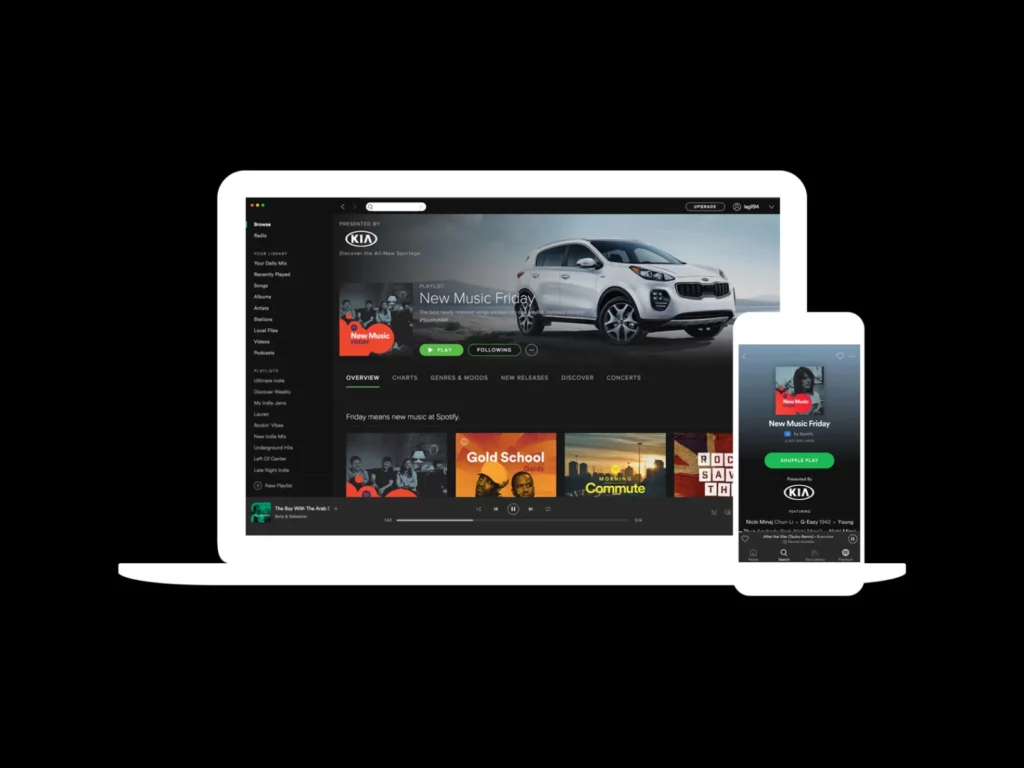
By exclusively sponsoring one of Spotify’s proprietary playlists, you have the opportunity to reach your target audience through the playlists they listen to.
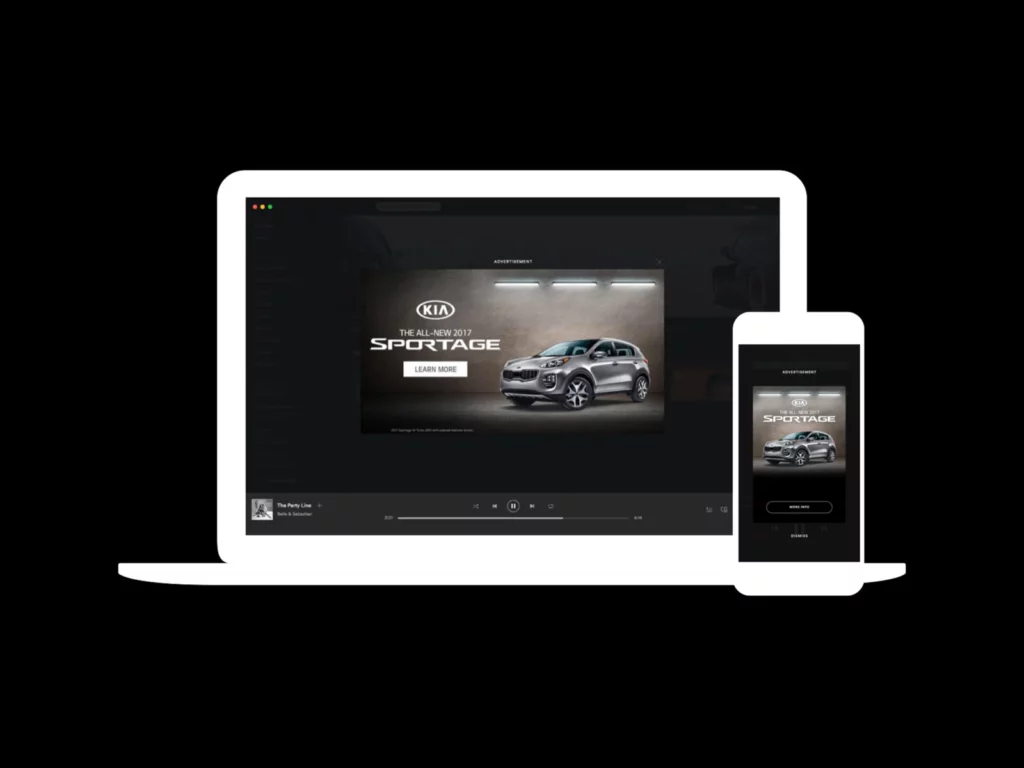
Overlay
A clickable full-screen banner that only appears when the user returns to the Spotify app, ensuring maximum viewability.
Allows you to be present on the Spotify homepage for 24 hours with a clickable banner and offers the possibility to add interactive multimedia elements. This format is only available for desktops.
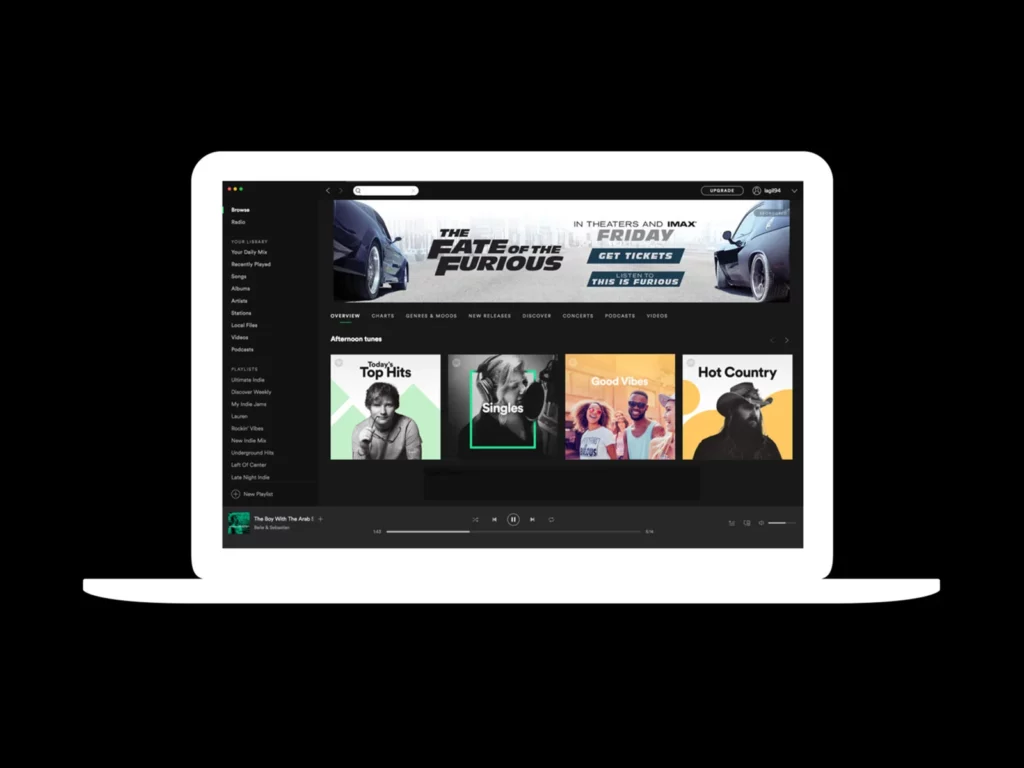
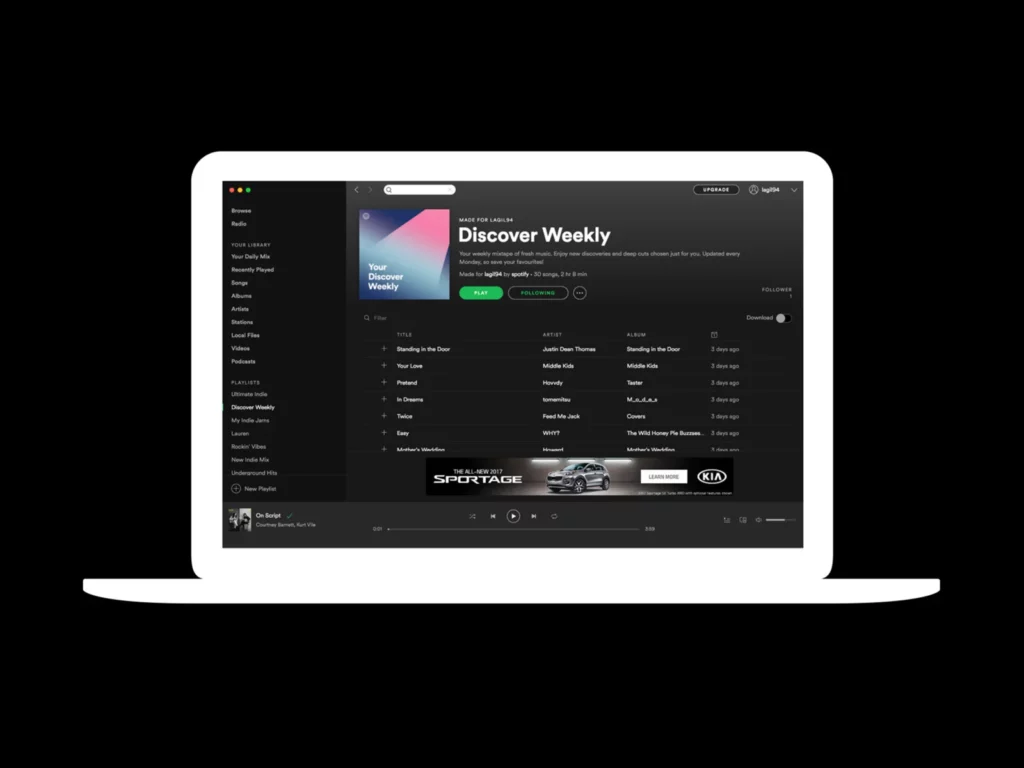
A clickable banner in leaderboard format that will be the only one on the screen for a duration of 30 seconds. Again, the ad is only available for desktop and is only delivered when the Spotify app is open in the foreground.
Well, now you know all the basics you need to create your Spotify campaigns! All that’s left to do is create your account and get your hands on Ads Manager so that you can finally add Spotify to your marketing mix and perhaps be the first in your field to reach your target audience via this innovative channel 🎧
Curious to find out more about the world of social media and digital marketing and always want to be on the ball? Subscribe to our newsletter to be updated on all the latest news 📫

Leave a Reply