


According to a 2019 report by the IAB (Interactive Adverting Bureau), the European digital advertising market is growing up to 12,3% compared to last year (source: https://iabeurope.eu/wp-content/uploads/2020/08/IAB-Europe_AdEx-Benchmark_2019-Report_FINAL.pdf).
The global spending on digital advertising in Europe was 64,8 billion (i.e. 50,4% of the grand total spending on advertising), of which 86% are concentrated in 10 countries: UK, Germany, France, Russia, Italy, Spain, Sweden, the Netherlands, Switzerland and Norway.
Recent studies show that 64% of people have been influenced in the purchasing decision by watching an online video, while 52% of such decisions are related to Facebook (source: https://www.studiosamo.it/il-nuovo-report-di-facebook-sullevoluzione-del-percorso-di-acquisto/).
People spend so much time online, that it would be unavailing not taking into account the digital world while designing an advertising strategy.
In fact, online is where people are: if you want to reach them, you must be there, talk to them, generate brand awareness, increase the number of leads, make sales effective.
This is why digital advertising is so important.
In this introductory article about digital advertising, we will go through the following topics:
- What is Digital Advertising
- What Makes Digital Advertisements effective
- Differences with Traditional Advertising
- Benefits of Digital Advertising
- Types of Advertisements
What is Digital Advertising?
To be concise, it is the process of publishing advertising content on online platforms such as social media, search engines, websites and any other program which you can access online.
Precisely because people, i.e. consumers, spend a lot of time on the Internet, digital advertising can help you bring your business right where your audience is.
What Makes Digital Advertising Unique?
The answer is easy: the power to exploit reliable websites such as Google, Facebook, Instagram, YouTube, TikTok, LinkedIn and many more.
In fact, in order to provide their customers with services, these platforms make their advertising space available for a fee.
To get an idea of how powerful such platforms are, here are some statistics:
- The global spending on digital advertising could exceed 345.000 billion dollars by 2020.
The broader section of this market is Search Advertising (which we will tackle on later) with an expected market volume of 148.488 million dollars by as early as 2020 (source: https://www.statista.com/outlook/216/100/digital-advertising/worldwide); - According to Google, users perform 3,5 billion searches per day (source: https://www.internetlivestats.com/google-search-statistics/);
- The search volume on Google increases by a 10% every year (source: https://www.teamsystem.com/store/blog/news/google-un-anno-di-ricerche/);
- The return on digital advertising in the United States reached a record 54,9 billion dollars in the first six months of 2019 (source: https://iab.it/mercato-pubblicitario-usa-digital-2019-549-miliardi-di-dollari-nel-primo-semestre/);
- 35% of searches are about products, while 34% of local searches including the keywords “near me” make the users visit the related physical stores.
Digital Advertising Can Help You Reach the Right Audience Thanks to the Right Message
Why is digital advertising so useful? Because it allows to reach the right people, with the right message, at the right time.
Digital ads work thanks to web advertising tools to search, manage, monitor, analyze and improve online advertising campaigns.
Not only can digital advertising publish your ads fast on different platforms, but, if well designed, it also perfectly integrates in the user-experience, taking the user to your website and to your business, in a natural and non-intrusive way.
Digital advertisements can be customized in order to optimize the relevance to your target user, and, as a consequence, maximize the conversion rate.
Since it is a digital process, it is possible to monitor and track basically any step made by the user in relation to your advertisement.
It Depends on Where and How You Do It
Digital advertising is no automated or repeated action: on the contrary, it can lead to very different effects, depending on the chosen platform and process.
Given the variety and diversification of digital advertisements, some businesses will benefit more from Google Ads, while LinkedIn ads will be the most fitting type of advertising for some others, or, again, Facebook or Instagram ads will be the perfect choice for those who wish to obtain more visibility or increase their sales.
Every platform has pros and cons, its own target and the most suitable strategies: those who will prefer Google Ads, for example, could experience some difficulties with Facebook advertising and the other way around.

Digital Advertising Is Nothing Like Traditional Advertising
With traditional advertising, monitoring how people actually react to your ad is quite difficult: in fact, it is not possible to relate a conversion to a specific advertisement or campaign.
That given, here’s another definition of digital advertising: advertising which you can monitor the performance of, as you can measure results, sometimes even in real-time.
Moreover, being advertising digital, you also have the chance to monitor which advertisements are performing better and adjust the ones which are not.
The Great Migration
A 2019 study by the Pew Research Institute (source: https://www.pewresearch.org/) noticed that about 90% of American people use Internet on a regular basis, while in early 2000s they were 50% (source: https://www.pewresearch.org/internet/fact-sheet/internet-broadband/).
The study showed insignificant gaps based on ethnicity, nationality or gender. A single 17% variation was observed on income basis.
The wider gap in the matter of Internet use is based on age. However, 66% of people aged +65 also surf the Internet regularly.
Therefore, it is quite likely for this trend to increase even more in the next future.
That is why exploiting the huge possibilities offered by digital advertising can prove so profitable for any business.
Why Digital Advertising Is So Successful
Let us borrow from Forbes the adjectives used to describe digital advertising: it’s affordable, specific and easy to use. That sums it all up.
It’s affordable, scalable, targeted
Digital advertising is affordable. You can easily start advertise online with a few dollars per day. And, as you grow, you can increase the allocated budget. The process is as follows: analyze, test, optimize and maximize the ROI.
The convenience does not only rely on saving economic resources: thanks to the auction system it applies, in fact, regardless of total spending, you can compete for the same advertising space as other, bigger, advertisers.
Another distinctive feature of digital advertising is the ease of use as well as the opportunities it offers: using data collected from your business or from social media, for instance, you can reach a very specific target. That means you could publish 5 different ads addressing to 5 different types of customer: each customer will have display the most relevant advertisement for them.
Is Digital Advertising Suitable for Small Businesses?
In addition to the benefits we already described, digital advertising is small businesses’ greater ally, since you do not need to allocate a huge marketing budget to advertise online.
With the right strategies, you can get great results and satisfaction and, who knows, maybe try to beat a bigger business!
Digital Advertising: Ads Variety
Here are the main types of digital advertisement:
- Display advertising
- Video advertising
- Search advertising
- Native advertising
- Remarketing
- Audio advertising
- Email marketing
- Social Media Ads
- Content Marketing
- Influencer Marketing
Display Advertising
Display Advertising is a way to attract the users of a website, social media or other digital platforms, and gently push them towards taking action. Visual ads, such as images or videos, encourage users to click, to land on a specific webpage and to answer a call to action (purchase, subscription, etc.).
The largest part of display campaigns is based on CPM (cost per thousand), i.e. the cost for a thousand impressions of your ad.
Lately this type of advertising has been more and more often used for retargeting campaigns (which we will deal with later in this article).
Video Advertising
Video ads are definitely one of the fastest growing types of digital advertising: by 2022, online videos are expected to represent 82% of the entire web traffic (source: https://www.cisco.com/c/en/us/solutions/collateral/executive-perspectives/annual-internet-report/white-paper-c11-741490.html).
Recent studies showed that 66% of people would rather watch a short video to know more about a product or service, and that users have twice the chances to share video content with friends compared with other types of content (source: https://www.wyzowl.com/video-marketing-statistics-2020/).
Another research, which observed over 3 billion ads impressions on a global scale for a period of 6 months, showed that potential customers are 27,4 folds more likely to click on video ads than on standard banners (source: https://www.prweb.com/releases/2012/9/prweb9890824.htm).
The premier platform for this type of digital advertising is undoubtedly YouTube.
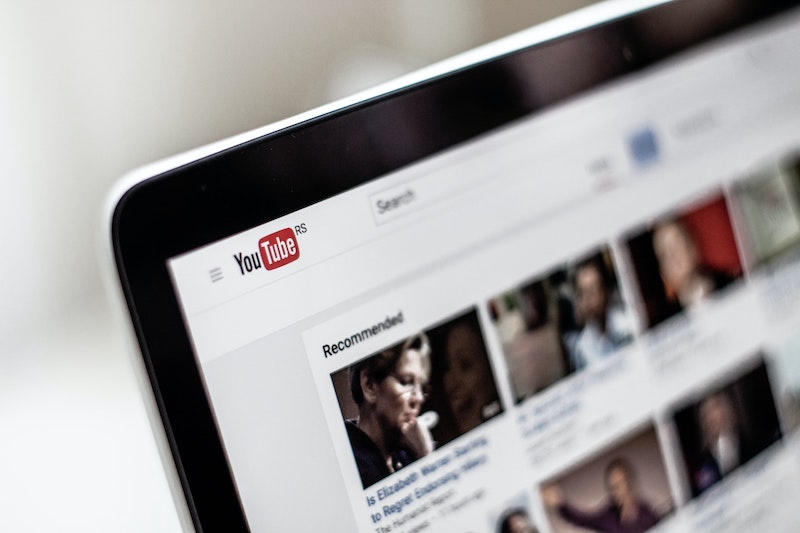
On this platform the following formats can be displayed:
- Skippable In-stream ads: they can be skipped after the ads has been displayed for 5 seconds;
- Non-skippable In-stream ads: they are not skippable and must be displayed full-length;
- Bumper ads: non-skippable ads lasting up to 6 seconds.
If you would like to know more about Google video ads, here is the official guide.
Video advertisements are also often used on social media and in programmatic advertising, i.e. a type of advertising based on tracking systems such as pixels or cookies (source: https://biteable.com/blog/what-is-programmatic-video-advertising/).
Search Advertising
More than half of websites’ visits start on a search engine: a great percentage of searchers (for a product, a service or solutions to their problems) has very strong intent. In many cases, in fact, the right ad can persuade them to purchase immediately.
Regardless of the variety of forms that search advertising may take, the idea is still the same: place the advertisement above, below or next to the search results.

Google’s leading position on the market has made its advertising platform, Google Ads (former AdWords), as a leader when it comes to search advertising. However, the same service is also offered by other search engines, such as Bing and Yahoo.
Search advertising on search engines is also known as SEA (Search Engines Advertising) and it is part of SEM (Search Engine Marketing), which includes all web marketing activities aimed to increase visibility and traceability of a website on search engines.
Unlike SEO (Search Engine Optimization), which focuses on the organic ranking of keywords and websites, search advertising includes paid ads directly in the search engine’s results.
Search advertising is based on CPC (cost per click), that means the advertiser will pay each time a user clicks on the ad and will be addressed to the landing page.
To find out data and statistics updated to 2024 from the world of PPC (Pay per Click) in Google Ads click here.
Native Advertising
The peculiarity of native advertising is to create ads that are so coherent and cohesive with the content the user is browsing (even as far as the web design of the hosting page or site is concerned), that they cannot be discerned as “foreign objects”. On the contrary, they are perceived as one with the content the user is reading, watching or listening to.
Native advertising aims for the creation of a continuous stream of content fruition, in a flawless process of optimization of the user-experience.
Unlike traditional advertising, such as banners on websites for example, native advertising is organically integrated in the user’s browsing session, be it on social media, news websites or recommended content on a webpage.
Remarketing (or Retargeting)
You have probably often come across the advertisement of a product you were about to buy or that you left in the cart of an online shop without confirming the purchase.
Well, this is remarketing: an effective way of reminding you of unaccomplished actions and gently pushing you towards the conclusion of such actions. This process is based on cookies, tags or pixels.
Platforms such as Google Ads and Business Manager, for example, offer the opportunity of remarketing: once the tracker has been set up, the chosen advertisement will be displayed to a specific audience which has already interacted with other of your ads, visited the website or watched a video.
Thus, remarketing implies targeting users which, directly or indirectly, have already interacted with you.
Remarketing can increase click percentage up to 400%, double the standard ads’ ROI, increase incomes up to 30% or more, and it is the best way to maximize conversions through the entire funnel (source: https://www.wordstream.com/blog/ws/2015/10/21/shopping-remarketing-lists)
Audio Advertising
This type of advertising is strongly growing thanks to the success of music streaming services and, most of all, of podcasts.
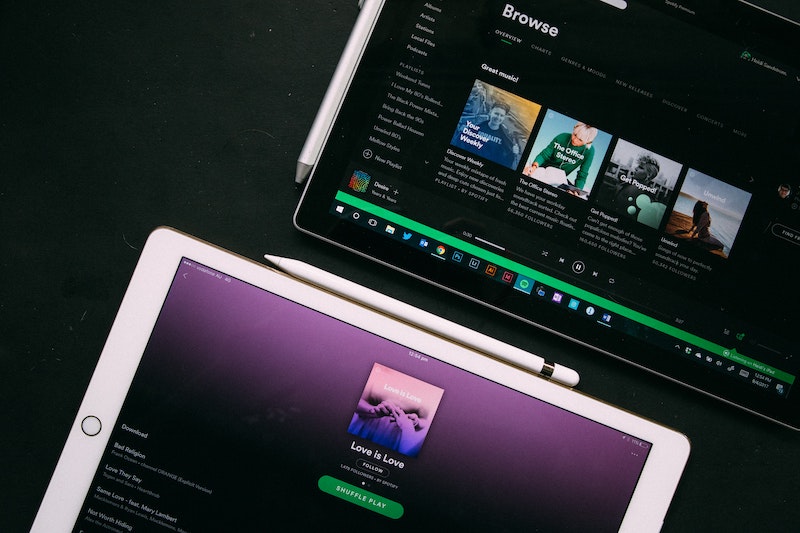
Audio advertising includes all pre and in-stream ads which are automatically played between two songs or podcasts. They can be single or tandem ads, or special formats such as presentations, live offers and advertisements directly incorporated in the audio file.
On a global level, the spending on audio advertising is expected to reach 4.558 million dollars by 2020 and a growth rate on a yearly basis, between 2020 and 2025, of 14%, with an expected market volume of 8.809 million dollars by 2025 (source: https://www.statista.com/outlook/20220/100/digital-audio-advertising/worldwide).
Email Marketing
72% of audience and 86% of business purchasers claim to prefer emailing as means to communicate with businesses, and this also includes advertising.
And the format is still growing: 2018 saw a high growth, with an average 281 billion emails sent per day; according to experts’ projections they will be 333 billion by 2022 (source: https://www.statista.com/statistics/456500/daily-number-of-e-mails-worldwide/).
Since email is so favored by users, it may grant higher engagement rate. ROI on email marketing, in fact, can reach extremely significant rates: according to the research “Marketer Email Tracker 2018”, it can grant up to 38 dollars on every spent dollar. This makes email marketing the advertising format with the highest ROI (source: https://blog.mailup.it/2019/11/vantaggi-email-marketing/).
However, using emailing as an advertising mean is not as simple as it may look. Obtaining such a high ROI depends on different factors, such as:
- Opportunity to get quality subscribers (not simply buying mailing lists);
- High engagement with the subscribers (engaging them with useful content and information)
- Retaining subscribers and accessing automation and segmentation tools.
Social Media Advertising
In 2019 users spent an average of 144 minutes per day on social media. In the United States, for example, users spent 123 minutes surfing social networks (source: https://www.statista.com/statistics/433871/daily-social-media-usage-worldwide/).
Given that premise, social media advertising offers a direct and measurable way to address interested users on your website.
Most part of social media advertising is based on broad demographic information, on interests and behaviors collected by search engines.
Not only social media advertising gives the opportunity to select targets based on demographic information – such as geographical position, gender or age –, but it also allows to select a more specific and precise target to maximize the relevance of your ad to the single user.
This means that the more specific and focused you are, both at choosing the target and the ads, the better will the advertisement perform.
Social media advertising is based on textual, video and display ads, and it is only displayed on social platforms as well as on the platforms owned by such social media (like, for instance, Facebook Audience Network – https://www.facebook.com/business/news/audience-network).
Content Marketing
Do you remember our question “What is digital advertising?”
At first glance you may not think of content marketing, but if 90% of marketers choose it as a marketing strategy, there must be a reason.
Content attracts interested people: it tells them about your products or services, without paying for digital advertising space.
Content Marketing is certainly not as fast as advertising (unless paid advertising is also used to amplify its effects), but it can help you reducing adv costs over time.
Consider it a magnet, able to attract as many people as possible on your website: over time the number will grow, and people will start trusting you and your business more and more, they will become loyal and maybe they will even purchase your products or services.
Influencer Marketing
Cambridge Dictionary defines influencers as someone able to influence or change the way other people behave.
That is why influencer marketing is effective – and successful: simply because people are influenced by other people and find word of mouth one of the most reliable source of advice.
Followers and brands go hand in hand: some influencers are followed by a high number of people and can influence a great number of them.
Your potential customer can look at such influencers as experts of your products or services and trust their advice.
Designing an effective strategy of influencer marketing can be a good way to improve brand awareness and increase coverage. If you would like to know more, click here.
Digital Advertising is Business’ Best Ally
Hopefully you now have a general picture of the main types of digital advertising.
Now, you just have to include it in your brand’s or business’ marketing strategy.
In Exa Futures, we know that focusing on the customer is essential to offer high quality advice, which really brings value as to maximizing results.
Discover how we did it for Lavazza, Aldo, Giovanni e Giacomo, Ricola and many more: https://exafutures.com/digital-agency
If you feel ready to plan a digital advertising strategy, but need assistance and support, please contact us: we will be glad to answer your questions about the wonderful universe of MarTech. And if you enjoyed this content and would like to read more, always new and up-to-date, subscribe to our newsletter here.